ANGOLA
Opera in Two Acts
MUSIC BY ROBERT PATERSON • LIBRETTist TBD
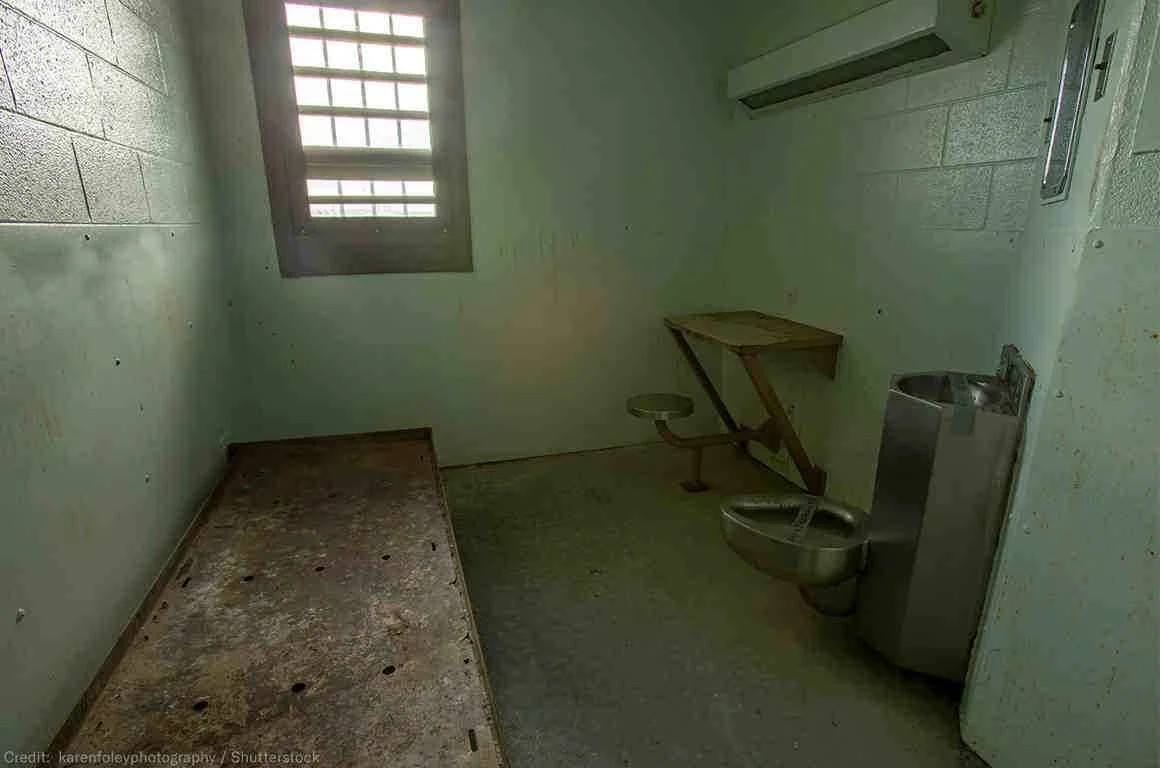
Solitary Confinement Cell at Louisiana State Penitentiary, a.k.a. “Angola” Maximum Security Prison, Angola, LA
Written: In-Development
Duration: ca. 80-90'
for seven singers with possible role doublings and orchestra: 3-3-3-3, 4-3-3-1, keyboard, 3 percussion, timpani, harp, strings (8-6-5-4-2)
Upcoming World Premiere: TBD
Publisher: Bill Holab Music
STATEMENT (In-Progress)
Angola is a two-act, 90-120-minute opera based on the story of three former prison inmates—Robert King, Albert Woodfox, and Herman Wallace—who collectively endured 114 years in solitary confinement. All three men served some of the longest periods of solitary American prison history.
Robert King spent 31 years in prison, convicted of an armed robbery he did not commit. He spent 29 of those years in solitary confinement before his conviction of a prison murder in 1973 was overturned, and he was released.
Albert Woodfox was serving time for armed robbery when, in 1972, a prison guard named Brent Miller was stabbed to death. Woodfox and Wallace were accused of Miller’s murder, even though no physical evidence linked them to the crime, and both men consistently maintained their innocence. They claimed the prison authorities framed them because of their membership in the Black Panther Party and their outspoken criticism of prison conditions. Louisiana juries convicted Woodfox in the early seventies and again in the late nineties, but both convictions were thrown out for racial discrimination in grand jury selection. Meanwhile, the appeals process dragged on, and Woodfox remained in solitary confinement for 43 years, finally being released in 2016 after the prosecution agreed to drop its push for a retrial and accept his plea of no contest to lesser charges of burglary and manslaughter.
Herman Wallace was also held in solitary confinement for more than 41 years until his conviction was overturned on grand jury discrimination grounds. He was released on October 1, 2013. The state re-indicted him on October 3, 2013, but he died on October 4, 2013, at age 71, before he could be re-arrested, having spent a mere one week as a free man.
All three men (collectively known as the Angola Three) were imprisoned at Louisiana State Penitentiary, also known as Angola Prison, considered the most brutal prison in the U.S. in the 1970s. Angola Prison was given that nickname because it is located on a former slave plantation that included slaves from Angola, Africa. Even today, inmates are often forced to do strenuous field work, much like the slaves during the time of the plantation. At Angola, segregation was rampant, and white inmates were given better positions; blacks worked in fields. There were stabbings every week, and the food was awful. Guards kept the good food for themselves. The staff members at the prison were predominantly white, and the prisoners were predominantly black.
The three lead male roles, King, Woodfox, and Wallace, will be sung by three black American singers: Woodfox as a tenor, Herman Wallace as a baritone, and Robert King as a bass-baritone. Female characters will include the inmates' family members, wives, girlfriends, and possible prison guards. Other prisoners will form a male chorus. Each lead will sing at least one area, and there will be at least one and possibly two trios, one in each act, for all three leads. There will be three arias for female characters as well. The final trio will most likely be anthemic and represent freedom. The arias will incorporate quotes from all three, and one of the final arias may incorporate the following quotes from Robert King’s TEDx Talk:
“It’s impossible to be dipped in waste and not come up stinkin’.”
"I am in prison, but I will not let prison be in me."
“The prison is you, all of you."
“Even though I am free of Angola, Angola will never be free of me."
Central to the opera will be themes of fear, desperation, loneliness, and the legality vs. morality of imprisonment in modern society. The opera will be non-judgmental, neither for nor against imprisonment; just stating facts, but alluding to dreams of each prisoner, regrets, anger, and most of all, representing what solitary confinement feels like on stage. The production will span decades, moving back and forth across time. It will make copious use of video screens and giant clocks or timers that show the progression of years, helping to illustrate how much time elapses during their incarcerations.
The opera will be in two acts: the first illustrating what happened before they were incarcerated and their conviction, the second act spanning the decades of their incarceration, with the end acting as a virtual postlude, focusing on their release. During their incarceration, there will be flashbacks of their past lives before prison and hallucinations during their imprisonment. The opera will draw a parallel with the African slave trade and incorporate historical elements that tie together Angola, the country, with Angola, the prison.
Visually, various themes may be incorporated into the opera, such as large, looming images of a Black Panther or J. Edgar Hoover in Act I (Hoover as an important historical element for his hatred of the Black Panther Party). At various times, the stage will feature three solitary cells where the walls may fall away at one point so that they can sing as one. A chorus will appear throughout the opera, possibly doubling as prisoners, family members, community members, or prison guards.
Some musical elements will be highly percussive and drawn from the inherent nature of prison life: clanking cell block doors, prisoners banging on walls, and guards sliding food trays under cell doors. One of the primary Leitmotifs throughout the opera, particularly in Act II, will be based on the phrase "Closed Cell Restricted,” so C-C-D (D = Re). This motif will musically represent incarceration.
The number of singers and instrumentation is still being decided. Currently, the work will be scored for seven singers with possible role doublings and a chorus. The initially proposed orchestration will be 3-3-3-3, 4-3-3-1, keyboard, three percussion, timpani, harp, and strings (8-6-5-4-2). The percussion instruments will include a variety of metallic sounds reminiscent of prison sounds and the clanking of prison doors, including brake drums, anvils, and bowed tam-tams.
Statement © Copyright 2023 by Robert Paterson